
8 Learning Journal Activities for St. Patrick's Day
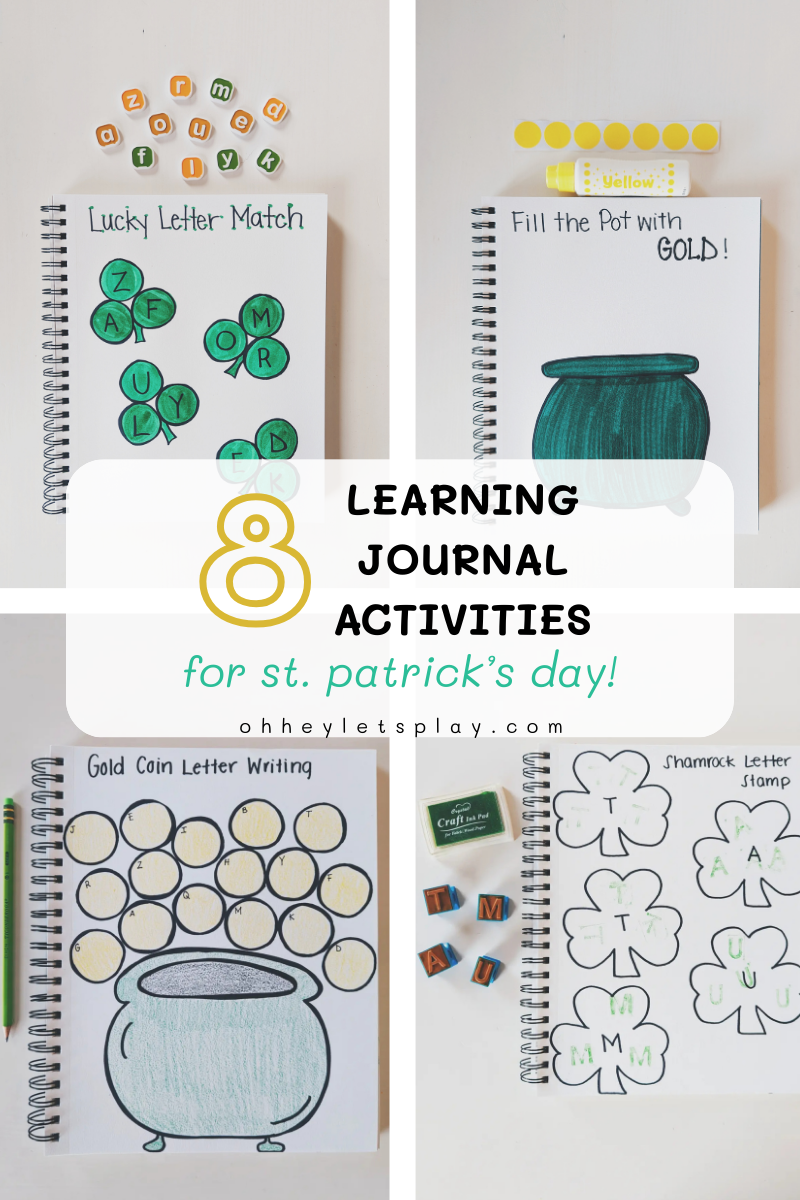
If you love seasonal learning but don’t want a ton of prep or complicated crafts, this one’s for you.
These St. Patrick’s Day learning journal activities are simple, hands-on, and developmentally appropriate — whether you have a curious toddler, a busy preschooler, or an early elementary learner working on reading and writing.
The best part? Every activity fits right into a learning journal, which means you’re building skills and creating a keepsake at the same time.
Let’s break them down by age.
Affiliate Disclosure:
This post may contain Amazon affiliate links. This means I may earn a small commission (at no extra cost to you) if you choose to purchase through those links. I only share supplies and resources we genuinely use and love in our home. Thank you for supporting Oh Hey Let’s Play!
🍀 Toddler Learning Journal Activities (18 Months–3 Years)
At this age, it’s all about exposure, exploration, and building those tiny hand muscles. Keep it simple. Keep it playful. Talk through everything.
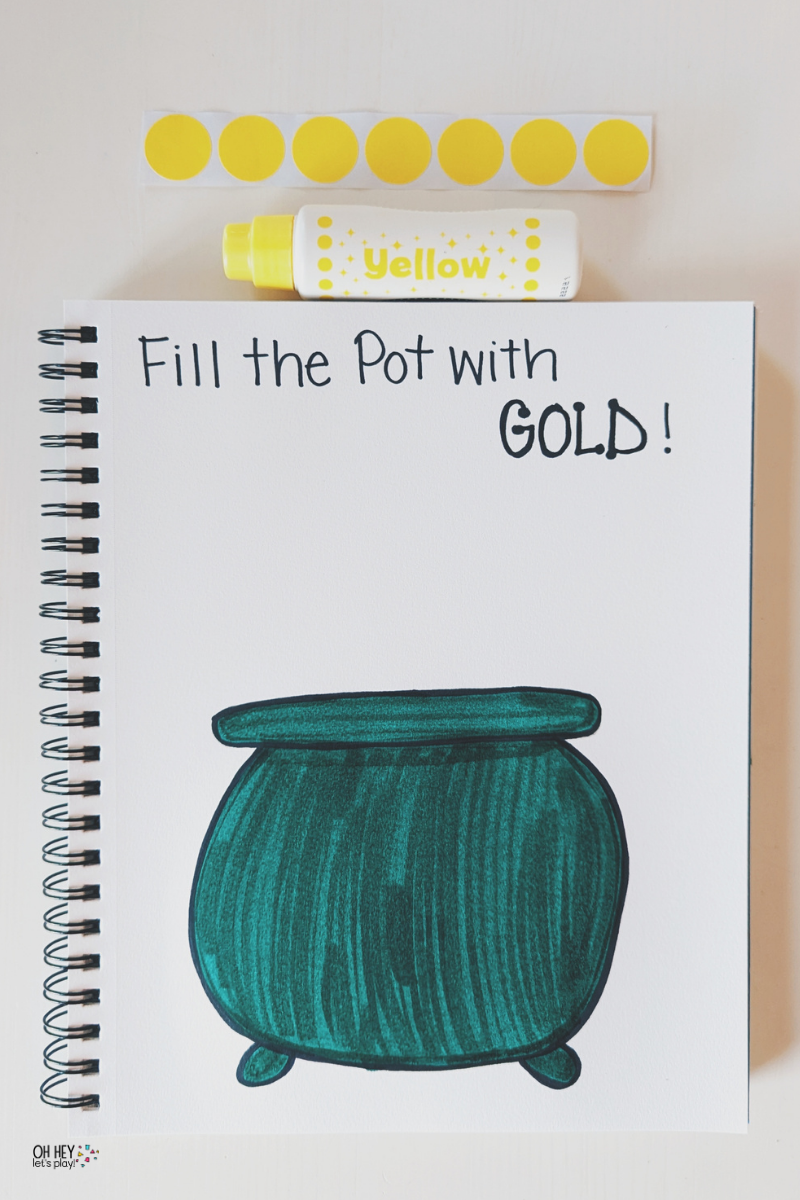
1. Fill the Pot with Gold
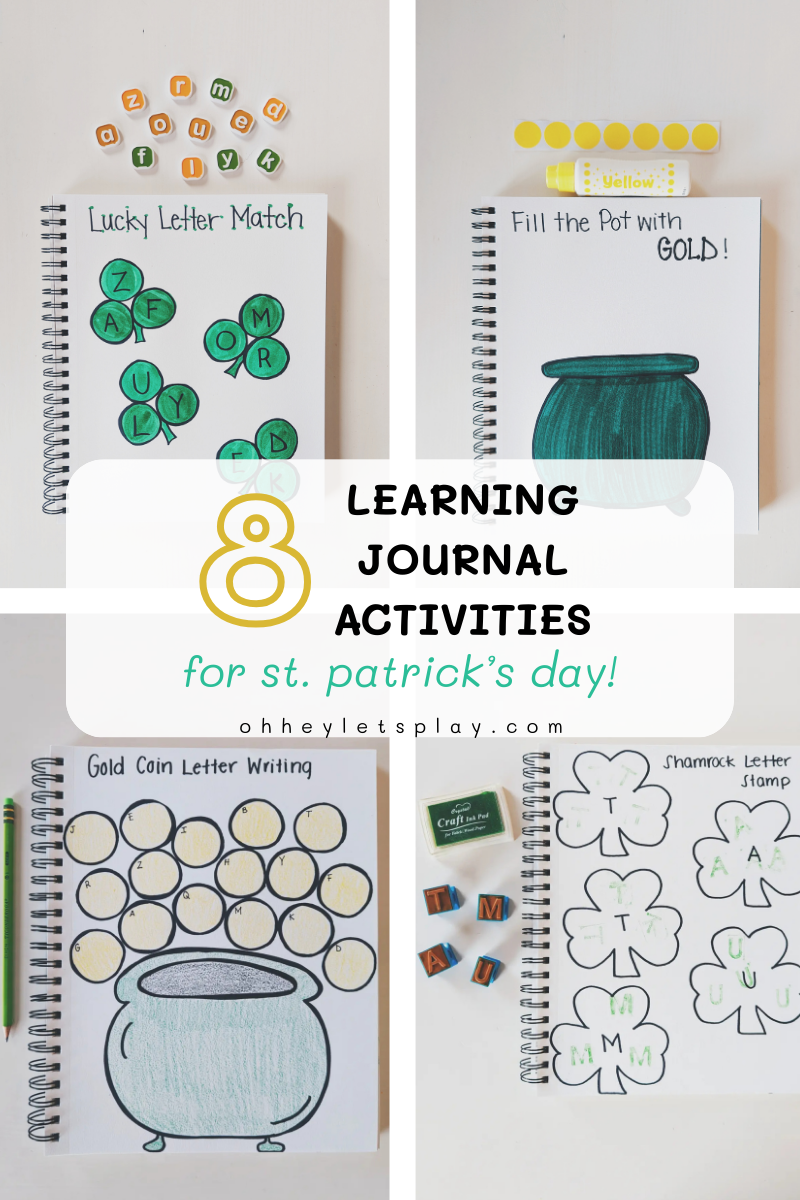
Draw a large pot in your child’s journal and invite them to “fill” it with gold using a yellow dot marker or yellow dot stickers.
You can:
Add small yellow dots inside the pot as visual targets (great for spatial awareness).
Leave it blank and let them freely dot wherever they’d like.
As they work, build vocabulary:
“You’re putting gold in the pot.”
“That’s yellow.”
“Inside the pot!”
“More gold!”
This strengthens fine motor skills (grasping, pressing, peeling), supports hand-eye coordination, and builds early language — all while feeling like play.
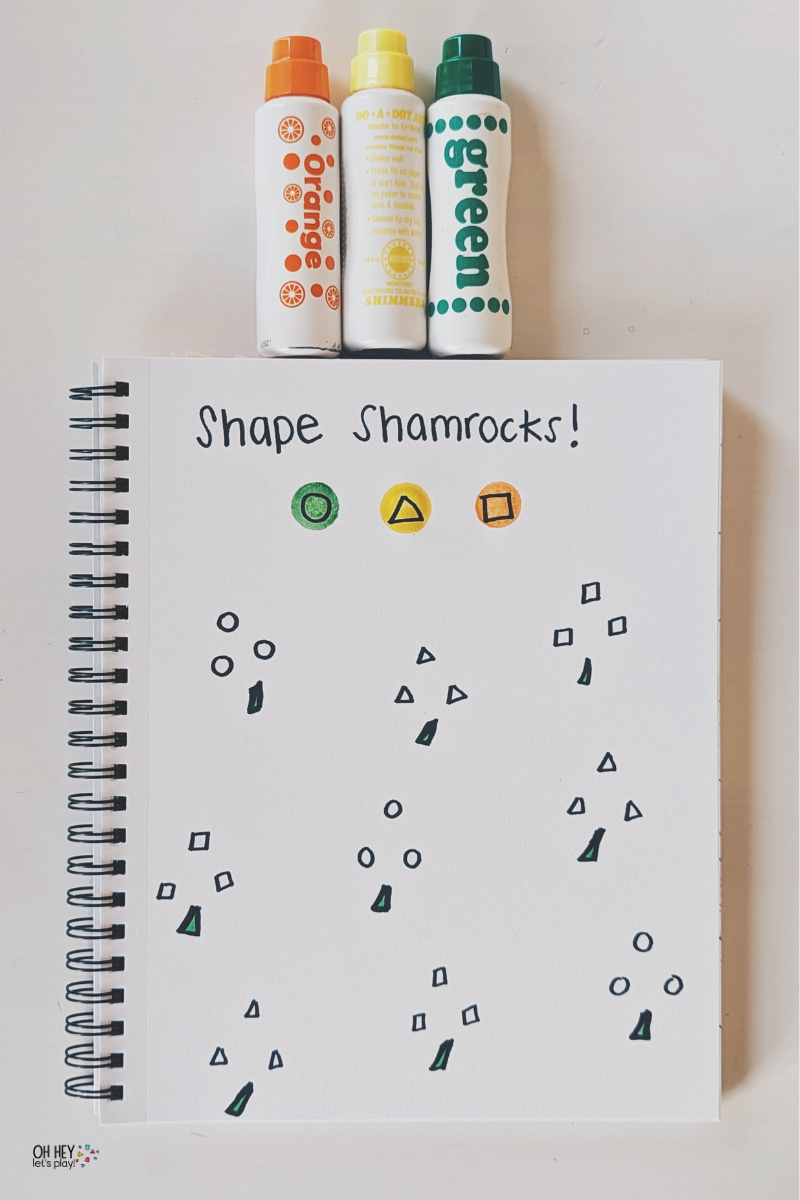
2. Shape Shamrocks
Create simple shamrocks made from shapes (circles, triangles, squares) and add a color code at the top. Children use coordinating dot markers to dot each shape the correct color.
This activity works perfectly for ages 2–3 and supports:
Shape recognition
Color matching
Spatial awareness
Fine motor strength
It also introduces following a visual “code” in a very approachable way.
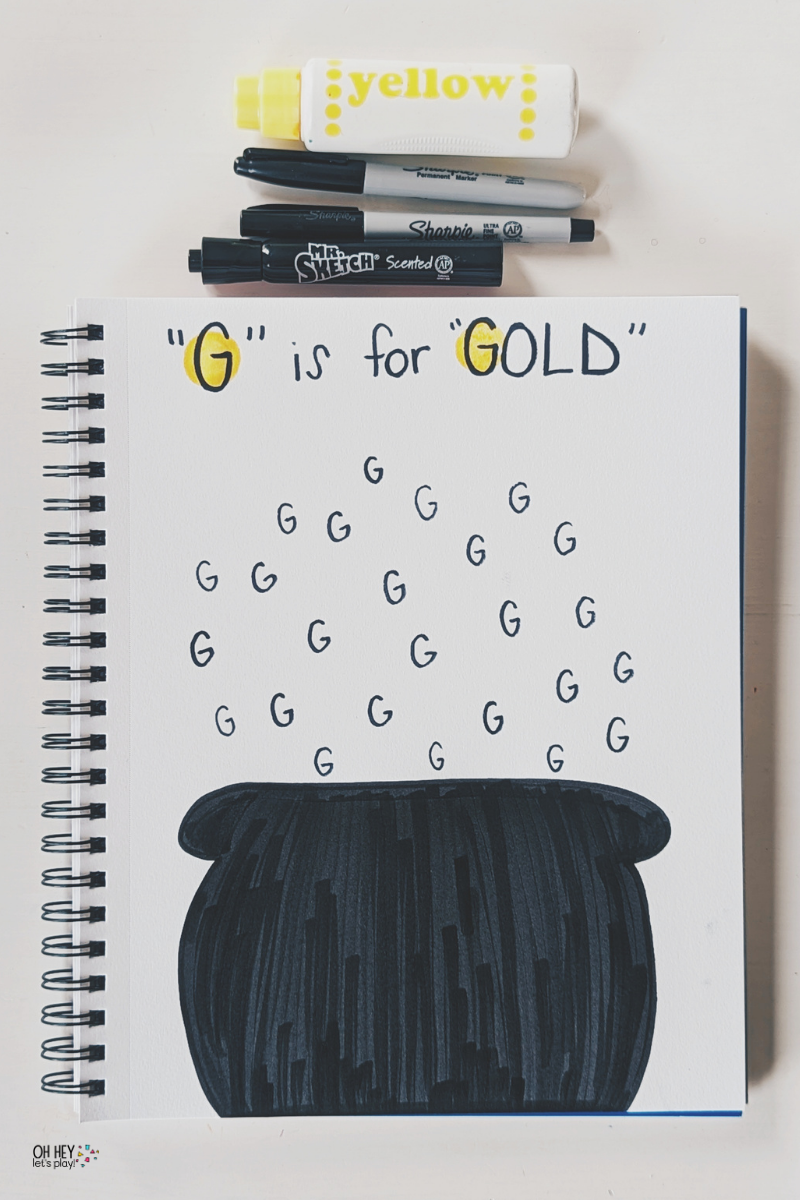
3. “G” is for Gold
This activity adds letter recognition to your classic fill the pot of gold theme.
Write multiple uppercase (or lowercase) Gs above the pot and invite your toddler to dot the Gs.
For an added challenge:
Mix in other letters and encourage them to find only the Gs.
Include both uppercase and lowercase and create a color code (yellow for uppercase, orange for lowercase).
Talk about the letter name and the sound it makes as you work together.
This builds:
Letter recognition
Early phonics awareness
Fine motor control
Spatial awareness
And again — it feels like a simple dot marker activity.
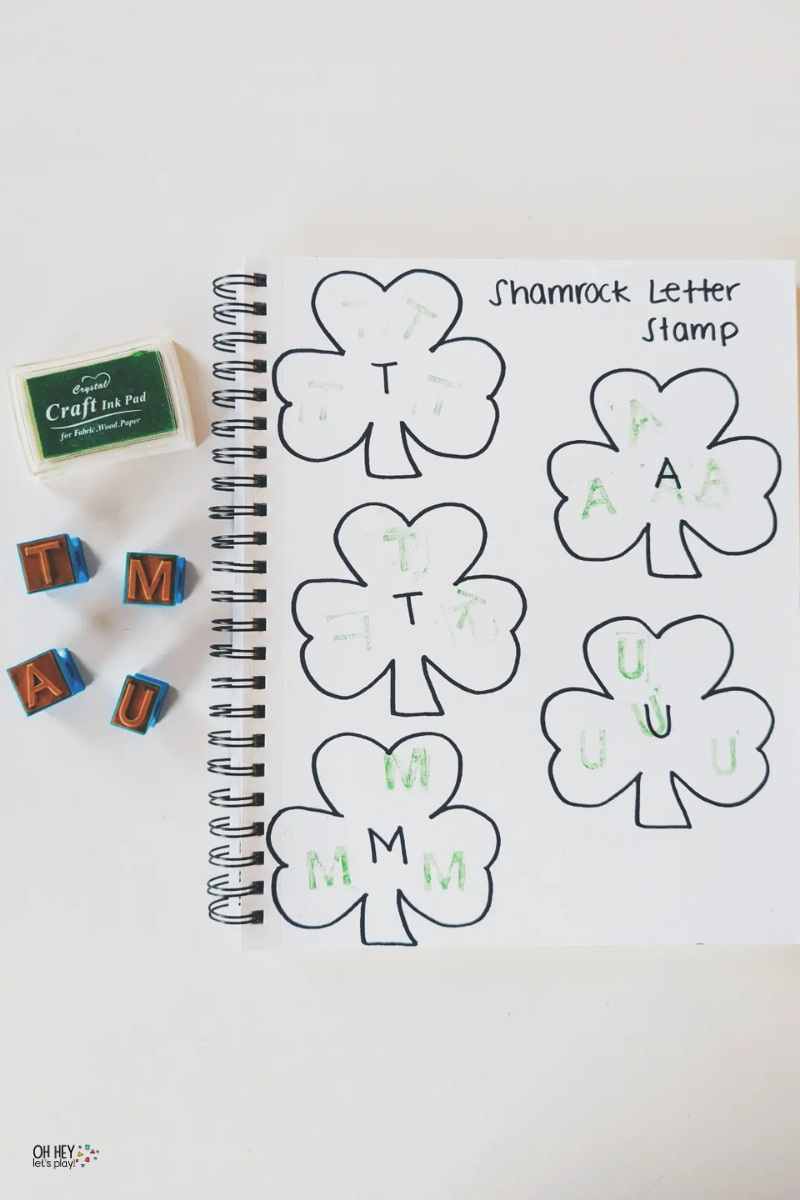
4. Shamrock Letter Stamp
Write the letters of your child’s name inside individual shamrocks. Provide coordinating letter stamps and let them stamp the matching letter inside each shamrock.
This is especially powerful for toddlers because recognizing the letters in their own name is one of the first meaningful literacy milestones.
You’re working on:
Letter recognition
Letter matching
Name awareness
Fine motor strength
Spatial awareness
For more learning journal ideas that work on the letters in your child’s name, check out this post!
🌈 Preschool Learning Journal Activities
Preschoolers are ready for a little more structure, some counting, and intentional letter work.
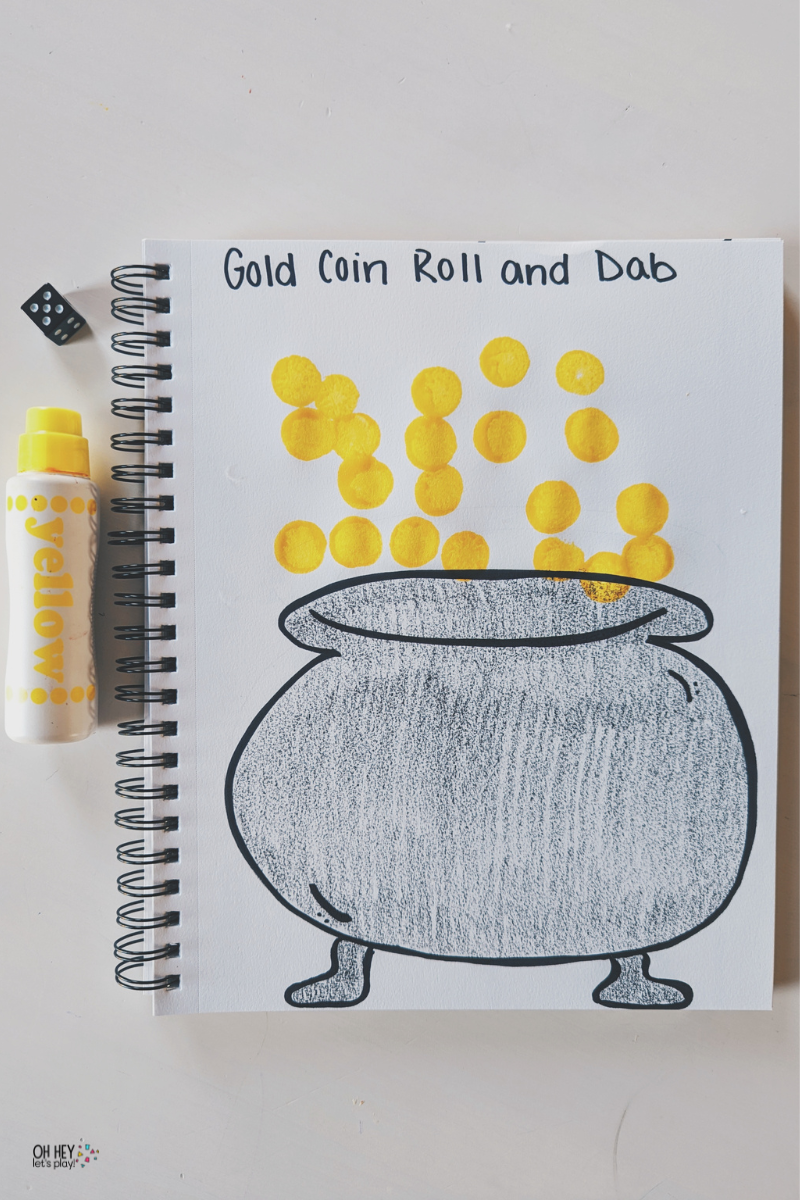
5. Gold Coin Roll & Dab
Draw a pot and give your child a die.
They roll the die, count the dots, and dot that same number of “gold coins” into the pot. Repeat until the pot is full.
This activity builds:
Counting skills
One-to-one correspondence
Number recognition
Fine motor strength
It also naturally reinforces subitizing (recognizing quantities on a die without counting each dot).
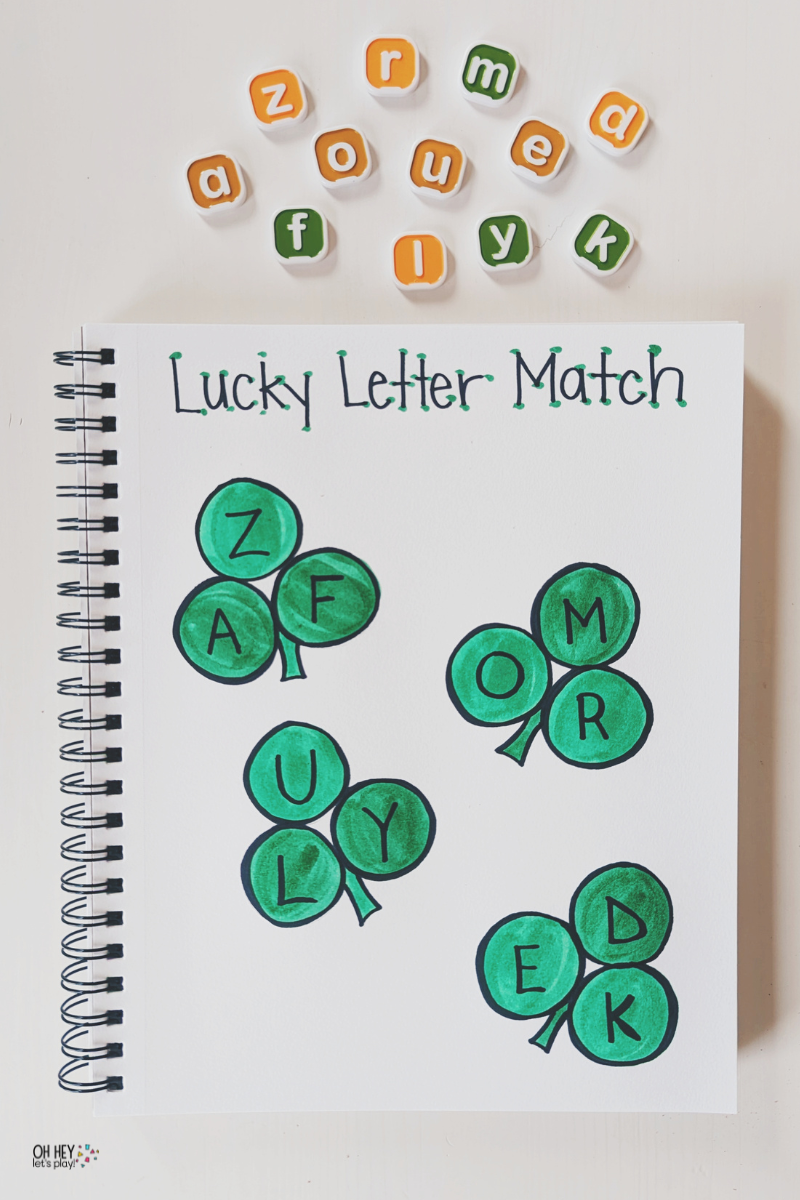
6. Lucky Letter Match
Write letters inside shamrocks and provide letter tiles for children to match.
They find the coordinating letter tile and place it on top of the matching letter in the shamrock.
This works for preschoolers and even early kindergarten students and supports:
Letter recognition
Letter matching
Visual discrimination
Spatial awareness
You can make it easier (uppercase only) or more challenging (mix uppercase and lowercase).
💚 Kindergarten & Early Elementary (K–1)
At this stage, we can lean into writing, spelling, and more independent reading practice.
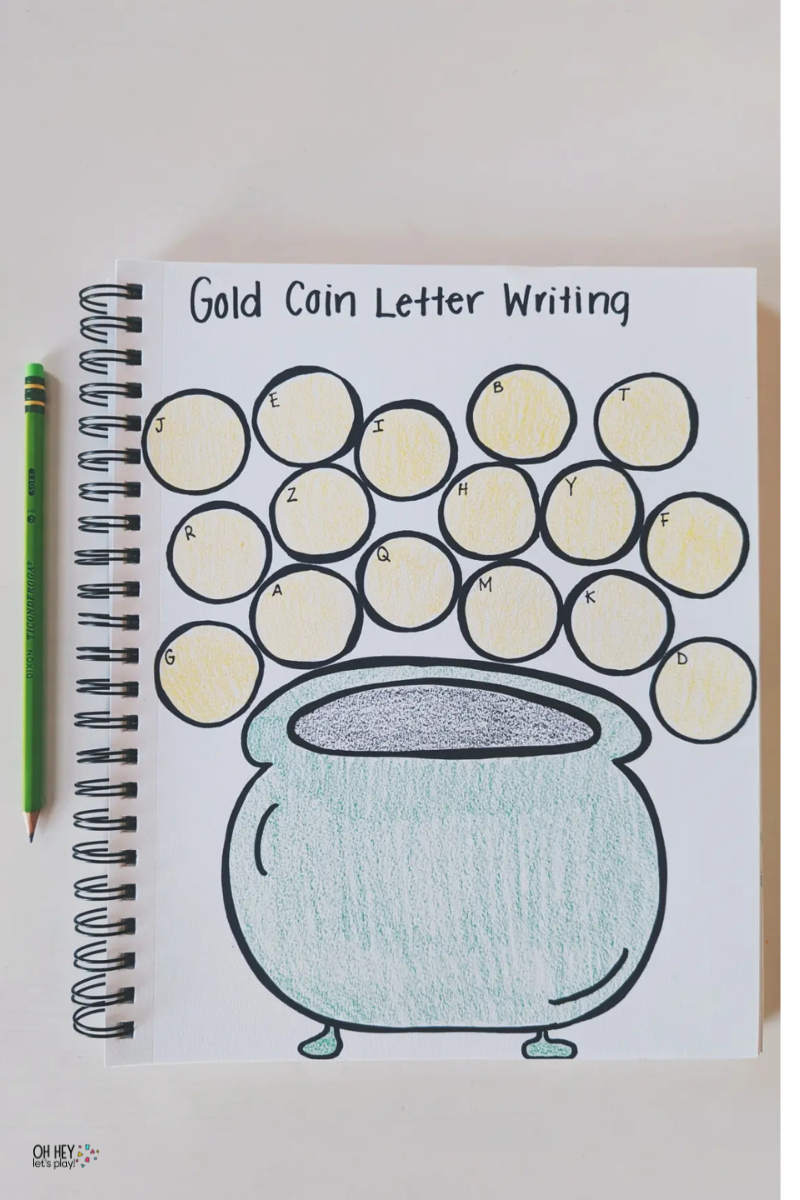
7. Gold Coin Letter Writing
Write small uppercase or lowercase letters inside each gold coin. Have your child name the letter and then write the same letter larger inside the coin.
This is a simple but effective way to practice:
Letter formation
Handwriting
Letter recognition
Fine motor control
You can focus on:
Specific letters your child is working on
Uppercase vs. lowercase
Letters in their name
It’s structured practice disguised as seasonal fun.
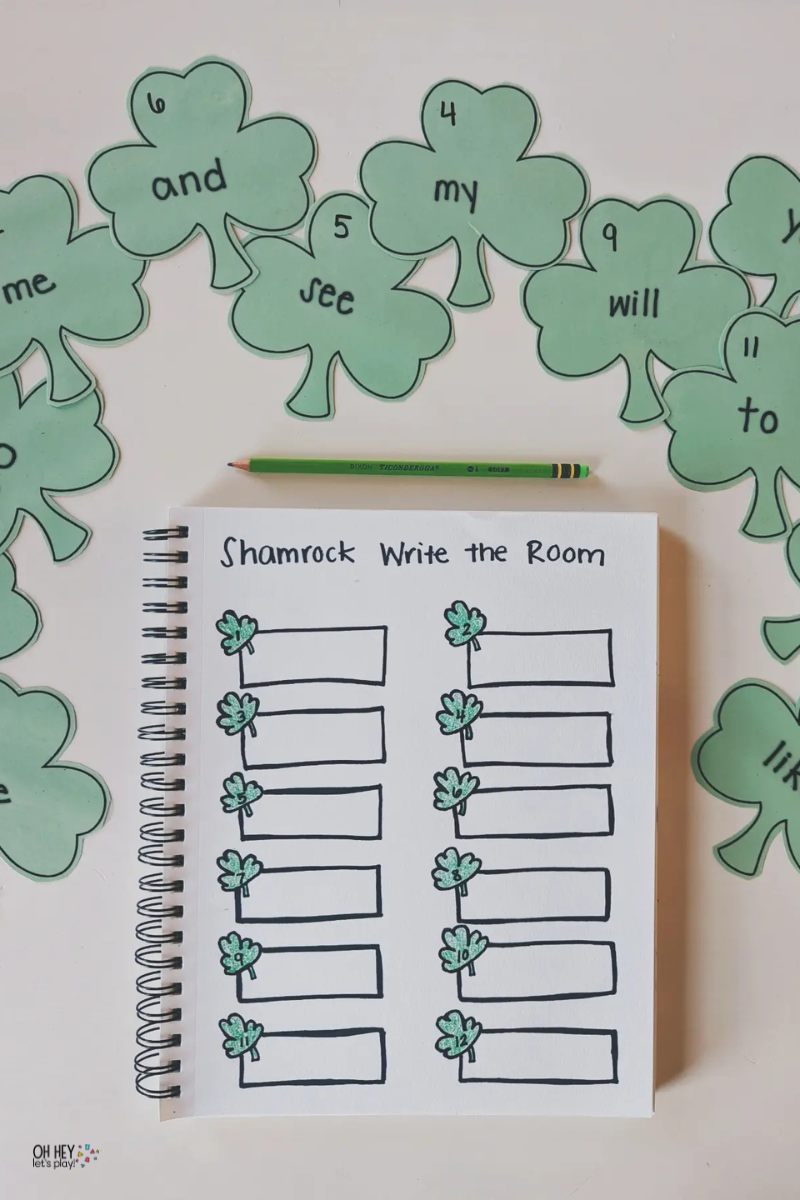
8. Shamrock Write the Room
This one was always a kindergarten favorite.
Write sight words or spelling words on shamrocks and hide them around the house or room. Each time your child finds a shamrock, they read the word and record it in their journal.
This activity works on:
Reading fluency
Spelling
Writing
Word recognition
It also gets kids up and moving — which often increases engagement and focus.
And as always, every time they write, they’re strengthening fine motor skills.
Why Learning Journals Work So Well
Seasonal activities like these aren’t just cute. They give your child:
Repeated exposure to important skills
Hands-on fine motor practice
Meaningful literacy and math experiences
A predictable, engaging learning routine
A keepsake of their growth over time
Learning journals allow you to meet your child exactly where they are — whether that’s peeling stickers at 2 years old or independently writing sight words in first grade.
If you’re looking for more seasonal learning journal ideas, printable pages, and organized activities by age group, you can find hundreds of ideas inside my digital membership — and if you just need some help with getting started (basic FAQs, favorite supplies, tips and tricks), check out this post here.
Want more spring ideas? Check out my Rainbow-Themed Learning Journal Activities here!
I hope you can use some of these ideas at home with your children! Please be sure to tag me @ohheyletsplay if you recreate them!